

Ten things to know about the federal NDP’s housing platform

Ten things to know about the federal NDP’s housing platform

Ten things to know about the federal NDP’s housing platform

La version française de ce billet se trouve ici.

With a federal election taking place in Canada on September 20, the New Democratic Party (NDP) of Canada has released its platform, which includes important housing-related measures.

Here are 10 things to know.

1. The NDP pledges to create at least 500,000 units of affordable housing in the next 10 years. This compares with the roughly 1.6 million Canadian households currently in core housing need (meaning households currently having difficulty affording suitable, appropriate housing). The platform does not specify what “affordable” would mean in this context.

2. The platform contains a vague pledge pertaining to the creation of “fast-start funds.” According to the platform, such funds would speed up the development of social housing by accelerating the application process and facilitating access to properties.

3. The NDP says it would waive the federal portion of the GST/HST on the construction of new affordable rental units. The for-profit rental development industry has lobbied for the removal of GST from all new rental construction in Canada. It is not clear which new rental units would qualify for GST exemption under the NDP’s proposal. If all new rental units were exempted from the GST, this could be quite costly in foregone tax revenue.

4. The NDP would re-introduce 30-year terms for CMHC-insured mortgages. This is directed at first-time home buyers (typically middle-quintile income earners). The current terms for new home buyers are for 25 years. Raising this threshold to 30 years would improve access to home ownership and reduce shortages in the rental market; however, it might also have the unanticipated effect of raising the price of starter housing.

5. The platform commits to doubling the Home Buyer’s Tax Credit to $1,500. While such a subsidy is modest in comparison with the cost of a down payment, it may be just enough to enable some households to buy. Again, such a measure could have the effect of both creating some slack in the rental market (i.e., making more units available to prospective tenants) while also exerting upward pressure on the selling price of starter houses.

6. The NDP would “facilitate co-housing,” by encouraging co-ownership agreements (including with financing assistance). I am not aware of Canadian research on this topic, nor have I seen the idea debated in any detail.

7. The platform commits to a 20% Foreign Buyer’s tax. This would apply to the sale of homes to persons who are neither Canadian citizens nor permanent residents. There are advantages and disadvantages to such a tax; I’ve previously blogged about this topic here.

8. The NDP would work with provincial and territorial governments to create a property registry. This would have the goal of increasing transparency about who owns properties. The NDP would also require “reporting of suspicious transactions in order to help find and stop money laundering.” British Columbia’s government has commissioned two reports on money laundering in real estate—Part 1 is here, and Part 2 is here.

9. The platform makes several laudable statements that are not supported by specific commitments. For example, the NDP commits to “fully implementing the right to housing,” but does not explain what that means. The NDP would work “toward the goal of ending homelessness in Canada within a decade…,” but the platform does not explain how that would be achieved. The platform further commits the party to working with other orders of government to “fast-track the purchase, lease and conversion of hotels and motels for emergency housing relief until more permanent, community-based solutions are available…,” but again without details.

10. The platform makes no mention of supportive housing. Supportive housing refers to subsidized housing with social work support, typically geared toward specific marginalized populations (e.g., persons with serious mental health challenges). It has long been considered an important policy response to long-term homelessness.

In sum. The NDP’s housing platform is ambitious, but short on details—none of the measures are costed out in the platform document. It also contains surprisingly little detail about measures that would address long-term homelessness. Having said that, the NDP should be commended for being the first federal party to release their housing platform.

I wish to thank the following individuals for assistance with this blog post: Jill Atkey, George Fallis, Michel Laforge, Christina Maes Nino, Michael Mendelson, Jeff Morrison, Doug Pawson, Steve Pomeroy, Sylvia Regnier, Tim Richter, Vincent St-Martin, Marion Steele, Jennifer Tipple and three anonymous reviewers.

Dix faits saillants concernant le logement dans la plateforme néodémocrate

Dix faits saillants concernant le logement dans la plateforme néodémocrate

Dix faits saillants concernant le logement dans la plateforme néodémocrate

An English-language version of this blog post is available here.

En vue de l’élection fédérale qui aura lieu au Canada le 20 septembre, le Nouveau parti démocratique (NPD) a lancé sa plateforme, qui comprend d’importantes mesures en logement.

En voici 10 faits saillants

1. Le NPD promet de créer au moins 500 000 logements abordables au cours des 10 prochaines années. En comparaison, c’est 1,6 million de ménages canadiens qui ont des besoins de logement impérieux (qui ont de la difficulté à se permettre un logement adéquat et approprié). Le parti ne précise pas ce qu’il entend par « abordable ».

2. La plateforme contient une promesse vague pour la création d’un « fonds de démarrage rapide ». Selon le parti, de tels fonds serviraient à accélérer la construction de logement social en réduisant le processus de demande, et en facilitant l’accès à la propriété.

3. Le NDP s’engage à éliminer la part fédérale de la TPS/TVH sur la construction de nouveaux logements abordables locatifs. Le lobby des promoteurs immobiliers de logements locatifs a milité pour l’annulation de la TPS de toute nouvelle construction de logement locatif au Canada. La proposition du NPD n’est pas claire et ne précise pas quels logements sont visés. Si tous les logements locatifs l’étaient, cela représenterait un important manque à gagner pour les coffres fédéraux.

4. Le NPD permettrait à nouveau à la SCHL d’assurer les hypothèques amorties sur 30 ans. Cette proposition vise les acheteurs d’une première maison (typiquement ceux se situant dans le quintile du centre). Actuellement, la période d’amortissement maximum est de 25 ans pour les nouveaux acheteurs. Augmenter la période d’amortissement maximale à 30 ans faciliterait l’accès à la propriété et atténuerait la pénurie dans le marché locatif; cependant, cela pourrait également augmenter le prix des premières maisons.

5. Le Crédit d’impôt pour l’achat d’une première habitation serait doublé pour atteindre 1 500$. Si une telle subvention demeure modeste comparée au coût d’une mise de fonds, cela pourrait permettre de justesse à certaines familles de passer à l’achat. Encore une fois, une telle mesure pourrait atténuer la pression sur le marché locatif (en libérant des logements pour des locataires potentiels), et en exercer davantage sur le prix des premières habitations.

6. Le NPD veut « faciliter la copropriété » en encourageant des ententes à cette fin (incluant une assistance financière). Je n’ai pas encore pris connaissance de recherche canadienne ni de débat public à ce sujet.

7. La plateforme impose une taxe de 20% aux acheteurs immobiliers étrangers. Celle-ci s’appliquerait à la vente de résidences à des partis qui ne sont ni citoyens canadiens ni résidents permanents. Il y a des avantages et des désavantages à de telles taxes; j’ai abordé le sujet par le passé (en anglais) ici.

8. Le NPD veut travailler avec les gouvernements provinciaux et territoriaux pour créer un registre des propriétés. Cette mesure aurait pour but de rendre plus transparents les véritables propriétaires. Le NPD veut également exiger « le signalement des transactions suspectes afin de mettre fin au blanchiment d’argent ». Le gouvernement britanno-colombien a publié un rapport en deux parties sur le blanchiment d’argent en immobilier. Vous pouvez en lire la première partie et la deuxième partie.

9. La plateforme contient plusieurs énoncés louables sans pour autant les appuyer par des engagements précis. Par exemple, le NPD s’engage à « la mise en œuvre complète du droit au logement », mais n’explique pas ce que cela signifie. Le NPD veut « mettre fin à l’itinérance au Canada d’ici une décennie […] », mais la plateforme n’explique pas comment le parti y arriverait. La plateforme engage le parti à travailler avec d’autres paliers gouvernementaux pour « accélérer l’achat, la location et la conversion d’hôtels et de motels afin de fournir des logements d’urgence jusqu’à ce que des solutions communautaires permanentes soient disponibles […] », mais encore une fois sans préciser comment il y procédera.

10. La plateforme ne mentionne aucunement le logement supervisé. On entend par cela des logements subventionnés comprenant des services sociaux et visant généralement des populations marginalisées précises (par exemple, des personnes vivant avec des troubles importants de santé mentale). Cette méthode est considérée depuis longtemps comme étant une réponse politique importante pour adresser le sans-abrisme à long terme.

En somme, les mesures concernant le logement dans la plateforme du NPD sont ambitieuses, mais elles manquent de précision. Le coût des mesures proposées ne figure pas dans le document. La plateforme contient étonnamment peu de détails sur les façons d’enrayer le sans-abrisme à long terme. Ceci étant dit, on doit féliciter le NPD d’avoir été le premier parti fédéral à dévoiler sa plateforme en matière de logement.

J’aimerais remercier les personnes suivantes pour leur appui à la rédaction de ce billet : Jill Atkey, George Fallis, Michel Laforge, Christina Maes Nino, Michael Mendelson, Jeff Morrison, Doug Pawson, Steve Pomeroy, Sylvia Regnier, Tim Richter, Vincent St-Martin, Marion Steele, Jennifer Tipple and three anonymous reviewers.
Supporting Indigenous residents at Horizon Housing

Supporting Indigenous residents at Horizon Housing

Supporting Indigenous residents at Horizon Housing

La version française de ce billet se trouve ici.

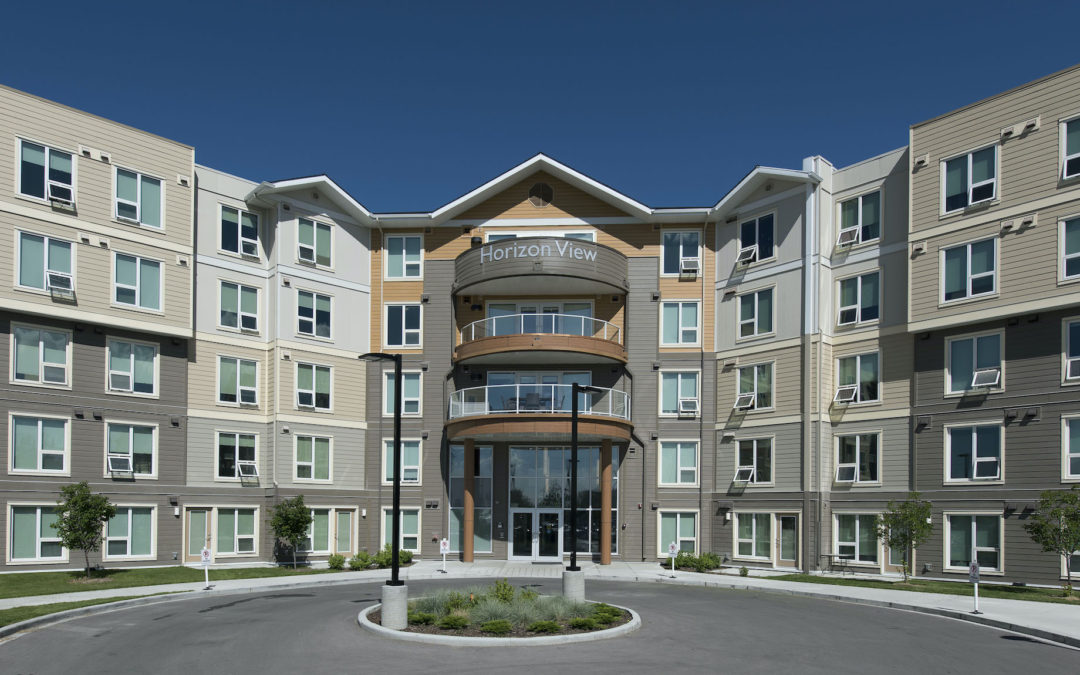
Horizon Housing is a non-profit affordable housing provider in Calgary that works in partnership with more than 40 community agencies that refer residents and provide ongoing social supports so residents can maintain stable housing over the long term.

Horizon recently commissioned a report with the view of improving housing outcomes for its Indigenous residents (i.e., residents who are First Nation, Métis or Inuit).

Here are 10 things to know.

1. One of Horizon’s desired outcomes is low rates of negative exits among its residents. A negative exit at Horizon is defined as an exit that happens for reasons other than a resident wishing to move, meaning it is involuntary on the part of the resident.

2. Indigenous residents at Horizon experience a disproportionate number of negative exits. While just over 10% of Horizon’s residents are Indigenous, 44% of Horizon’s negative exits concern Indigenous residents. More than three-quarters of negative exits experienced by Indigenous residents at Horizon involve a tenancy that lasts less than a year.

3. In 2020, Horizon reached out to Nick Falvo Consulting to explore the matter. The following methodological approaches were used: a literature review; interviews with Indigenous residents at Horizon; interviews with subject specialists; and focus groups.

4. An Advisory Committee met monthly to provide guidance to the research project. This committee’s membership consisted of four Indigenous people and two non-Indigenous people. They provided crucial guidance on protocol throughout the project, and reviewed drafts of all documents.

5. The report went through an extensive review process. This included the circulation of a draft version of the report to all research participants and several dozen experts across Canada. It also included four virtual presentations of draft findings, including one specifically for Elders.

6. The final report recommends more on-site cultural programming and access to Elders. A dominant theme raised by Indigenous residents was a desire to have Horizon organize cultural events in partnership with Indigenous-serving organizations. Such activities would be led by Elders.

7. It also recommends more opportunities to smudge. Several Indigenous residents expressed a strong desire to smudge, but were not sure whether they were allowed to smudge in their units, and were concerned that doing so might trigger smoke alarms or other concerns.

8. The report proposes an enhanced resident orientation process. Currently, resident orientation at Horizon is led by building managers. The report recommends an enhanced orientation that might consist of several stages, whereby incoming residents would feel more welcome and supported.

9. The report recommends that Horizon hire an Indigenous Liaison Person. Other terms for such a position include Indigenous Advisor and Cultural Resource Person. This person could help steward (i.e., ‘project manage’) Horizon’s Indigenous initiatives, track recommendations made in this report, and report on them regularly to meetings of Horizon’s Leadership Team, Horizon’s Board of Directors, and the community at large.

10. The report includes additional recommendations. These consist of: improved staff training; increasing the size of Horizon’s Resident Services Team (which provides front-line assistance to residents); Crime Prevention Through Environmental Design (an approach to building design whereby a law enforcement lens is applied to the built environment); the implementation of an eviction prevention initiative (whereby rent could be covered in the case of extenuating circumstances); Indigenous representation on Horizon’s Board of Directors and staff leadership team; and an annual survey specifically for Horizon’s Indigenous residents.

In sum. This report provides specific advice on how Horizon can work to improve housing outcomes for its Indigenous residents. Most of its recommendations are contingent on external funding, and all involve collaboration with Horizon’s partners—both existing partners and new partners. The report’s findings and recommendations may also be helpful to other housing providers across Canada.

Supporting Indigenous residents at Horizon Housing

Appuyer les résidents autochtones chez Horizon Housing

Appuyer les résidents autochtones chez Horizon Housing

An English-language version of this blog post is available here.

Horizon Housing est un organisme à but non lucratif basé à Calgary qui fournit des services de logement abordable en partenariat avec plus de 40 agences communautaires. Ensemble, ils offrent des services afin de favoriser que leurs résidents demeurent logés.

Récemment, Horizon a commandé un rapport dans le but d’améliorer les perspectives de logement pour ses résidents autochtones (c’est à dire, les résidents issus des Premières Nations, les Métis et les Inuits).

Voici 10 faits saillants tirés du rapport.

1. L’un des résultats souhaités par Horizon est un bas taux de « sorties involontaires » par ses résidents. On entend par cela toute sortie qui a lieu pour des raisons autres que le désir du résident à déménager de son propre gré.

2. Les résidents autochtones chez Horizon font l’objet d’une quantité disproportionnée de sorties involontaires. Bien qu’un peu plus de 10 % des résidents d’Horizon sont autochtones, ils représentent 44 % des sorties involontaires. Plus du trois quarts des sorties involontaires vécues par des résidents autochtones chez Horizon ont lieu au bout d’une résidence de moins d’un an.

3. En 2020, Horizon a demandé à Nick Falvo Consulting de creuser l’enjeu. Les méthodes suivantes ont été suivies : une analyse documentaire; des entrevues avec des résidents autochtones chez Horizon; des entrevues avec des spécialistes; et des groupes cibles.

4. Un comité consultatif s’est rencontré mensuellement pour orienter le projet. Ce comité était composé de quatre personnes autochtones et deux personnes allochtones. Leurs conseils ont été essentiels durant le projet, et ils ont révisé les ébauches de tous les documents qui en sont issus.

5. Le rapport a été scruté à la loupe. Cela a compris la circulation d’une ébauche du rapport auprès de tous les participants, et plusieurs dizaines d’experts à travers le Canada. Quatre présentations d’une ébauche des conclusions ont eu lieu, dont une pour les Aînés.

6. Le rapport recommande plus de programmation culturelle sur le site des résidences, ainsi qu’un accès aux Aînés. L’un des thèmes dominants soulevés par les résidents autochtones était le désir que Horizon organise des événements culturels en partenariat avec des organismes au service des Autochtones. De tels événements seraient dirigés par des Aînés.

7. Le rapport recommande aussi plus d’occasions permettant la pratique de purification par la fumée (smudging). Plusieurs résidents autochtones ont exprimé un fort désir de smudger, mais ne savaient pas s’ils avaient la permission de le faire dans leurs appartements et s’inquiétaient de déclencher l’alarme à feu ou de s’attirer d’autres problèmes.

8. Le rapport propose un processus d’orientation amélioré. Actuellement, l’orientation des résidents est menée par les gestionnaires des édifices. Le rapport recommande une orientation améliorée et en plusieurs étapes, où les nouveaux arrivants se sentiraient plus accueillis et appuyés.

9. Le rapport recommande que Horizon embauche un responsable de la liaison autochtone. D’autres titres possibles pour un tel poste comprennent Aviseur autochtone ou Responsable des ressources culturelles. Cette personne aurait pour mandat d’aider à gérer les initiatives autochtones d’Horizon, tenir compte des recommandations de ce rapport, et d’en faire part à l’équipe de gestion de Horizon, son conseil d’administration, et l’ensemble de la communauté.

10. Ce rapport comprend des recommandations additionnelles. Elles comprennent : l’amélioration de la formation des employés; l’agrandissement de l’équipe des services aux résidents d’Horizon (qui a la responsabilité d’offrir des services de première ligne aux résidents); l’aménagement du lieu selon des principes vérifiés pour réduire le crime; la mise en oeuvre d’une initiative de prévention d’expulsion (par laquelle le loyer serait payé dans des cas exceptionnels); une représentation autochtone sur le conseil d’administration et dans l’équipe de gestion d’Horizon; un sondage annuel pour les résidents autochtones d’Horizon.

En somme, ce rapport fournit des conseils ciblés pour permettre à Horizon d’améliorer les perspectives de logement de ses résidents autochtones. La plupart des recommandations dépendent de financement externe et l’ensemble des recommandations dépendent aussi de la collaboration des partenaires actuels et futurs d’Horizon. Les conclusions du rapport pourraient également être utiles pour d’autres fournisseurs de logement à travers le Canada.

Ten things to know about Canada’s 2021 federal budget

Ten things to know about Canada’s 2021 federal budget

Ten things to know about Canada’s 2021 federal budget

La version française de ce billet se trouve ici.

On April 21, the Trudeau government tabled the 2021 federal budget. The budget includes additional COVID-related measures,[1] a major childcare initiative, and various forms of support for low-income Canadians (including for housing and homelessness).

Here are 10 things to know.

1. The budget commits “up to $30 billion over five years” for early learning and childcare.  The Government of Canada sets out the following goal: “That, in the next 5 years, Canadian parents across the country have access to high quality early learning and childcare, for an average of $10 a day.” This may be the single most important social policy announcement made by any federal government at any point in the past 25 years. But in order for this to be successful, considerable cooperation will be required from provincial and territorial governments.

2. The budget announces major changes to financial assistance for post-secondary students. The Government of Canada is making the grant system more generous and the loan system more forgiving. While the value of grants had doubled as a COVID measure, the budget announces that these enhanced amounts will remain in place until July 2023. Also, students earning less than $40,000 will now be exempt from making payments on their loans, while the previous threshold had been $25,000.[2]

3. The budget proposes important support for seniors, including for long-term care and income support. The budget proposes $3 billion over five years “to support provinces and territories in ensuring standards for long-term care are applied…” The budget also proposes a one-time payment of $500 in August 2021 to Old Age Security (OAS) recipients aged 75 or over. It further proposes to introduce legislation that would permanently increase OAS payments for recipients aged 75 and over by 10%.

4. Low-wage workers will receive additional assistance. The Government of Canada announced its intention to raise the federal minimum wage to $15/hr., indexed to inflation, “with provisions to ensure that where provincial or territorial minimum wages are higher, that wage will prevail.” This directly affects over 26,000 workers in the federally-regulated private sector. The budget also proposes to expand the Canada Workers Benefit to support approximately 1 million additional Canadians in low-wage jobs, meaning “that for the first time, most full-time workers earning minimum wage will receive significant support from this important benefit…A single, full-time, minimum wage worker could receive about $1,000 more in benefits than they would under the current system…” This will be especially helpful for single adults without dependants.[3]

5. The budget proposes important new investments for Indigenous peoples. This includes “more than $6 billion to help close infrastructure gaps in Indigenous communities, and $2.2 billion for actions to end the national tragedy of missing and murdered Indigenous women and girls.” It did not announce an urban, rural and northern Indigenous housing strategy, as many advocates had expected.

6. The budget announces $1.5 billion in new funding for the Rapid Housing Initiative (RHI). Launched in September 2020, this program focuses on the creation of modular housing, the acquisition of land, and the conversion of existing buildings into affordable housing. RHI provides up-front grants for each unit, but relies on provincial and territorial governments to fund ongoing costs.

7. The Canada Housing Benefit will be enhanced. Specifically, an additional $315.4 million over seven years has been committed “for low-income women and children fleeing violence to help with their rent payments.” This benefit was first announced in November 2017. Unfortunately, many provincial and territorial governments have been slow to sign bilateral agreements with the Government of Canada, thus delaying take up.

8. The National Housing Co-Investment Fund (NHCF) has received enhancements. This includes $750 million in new funding, as well as $250 million to support the construction, repair, and operating costs of transitional housing and shelter spaces for women and children fleeing violence (however, it is not clear how much of this consists of grants vs. loans). The NHCF, originally announced in 2017, contains both grants and loans, but has been criticized for being mostly a loan program. It has also been criticized for its onerous application and approval process.

9. This government continues to increase annual funding for homelessness. This budget proposes an additional $567 million over two years, beginning in 2022-23, for Reaching Home (i.e., the federal government’s main funding vehicle for homelessness). This preserves the 2021-22 funding levels announced in the Fall Economic Statement in response to the pandemic. The budget also proposes $45 million over two years for a pilot program “aimed at reducing veteran homelessness through the provision of rent supplements and wrap-around services for homeless veterans such as counselling, addiction treatment, and help finding a job.”

10. An assortment of other housing-related measures was announced. This includes: a national 1% tax on vacant property owned by non-residents; $600 million over seven years “to renew and expand the Affordable Housing Innovation Fund, which encourages new funding models and innovative building techniques in the affordable housing sector;” $118.2 million over seven years for the Federal Community Housing Initiative (for operators of federally-administered co-op housing units); a reallocation of $300 million in loan funds from the Rental Construction Financing Initiative to support the conversion of vacant commercial property into rental housing; $25 million in new housing funding for the Northwest Territories; and $25 million in housing for Nunavut.

In sum. This budget contains important new social investments, especially for childcare. It includes important new funding enhancements for low-income Canadians, including for affordable housing and homelessness. And it does so at a time when federal debt-serving costs are low by historical standards due to low interest rates.

I wish to thank the following individuals for assistance with this blog post: George Fallis, Martha Friendly, Rob Gillezeau, Michel Laforge, David Macdonald, Rianne Mahon, Michael Mendelson, Jeff Morrison, Steve Pomeroy, Shayne Ramsay, Sylvia Regnier, Vincent St-Martin and Greg Suttor. I also wish to thank HomeSpace Society for permission to use the photo that appears above.

[1] These include the extension of the wage subsidy, rent subsidy, and Lockdown Support for businesses and other employers until September 2021. Together, these particular measures amount to $12.1 billion in additional support.

[2]  For a thorough overview of all changes announced to post-secondary education, check out this analysis.

[3] For more on the income-related challenges of single adults without dependants, see this recent report.